In the evolving landscape of modern Indian architecture, the demand for sleek, space-efficient, and durable fenestration solutions is at an all-time high. Homeowners and architects in bustling cities like Ghaziabad, Noida, and Delhi NCR are increasingly moving away from traditional bulky frames in favor of minimalist designs. At the forefront of this revolution is the Aluminium Sliding Window.
At Wideline Window, we have seen a significant shift in preference towards sliding systems, particularly in high-rise apartments and compact urban homes. Unlike traditional casement windows that swing outward or inward, sliding windows operate on a horizontal track. This fundamental difference in mechanics offers a distinct advantage: they do not occupy any internal or external space to operate.
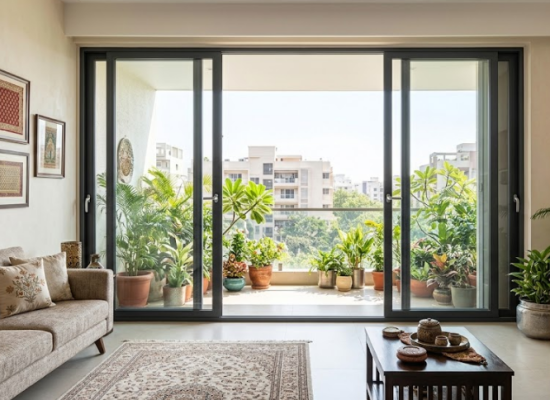
When compared to other materials like uPVC or wood, aluminium sliding windows offer a unique set of advantages that make them the preferred choice for contemporary living.
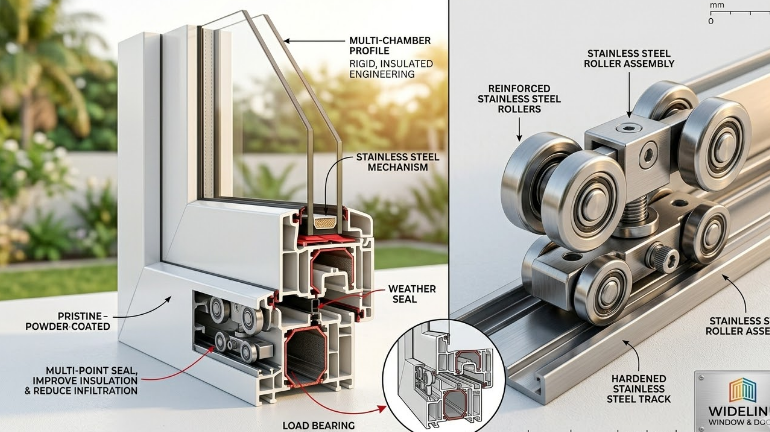
At Wideline Window, we use high-grade aluminium extrusions. These profiles are designed with multiple chambers inside. Why does this matter? These chambers act as thermal breaks and structural reinforcements. They prevent the transfer of heat from outside to inside, improving energy efficiency, while also making the frame rigid enough to withstand high wind pressures common in high-rise buildings in Indirapuram and Noida.
The smooth operation of a sliding window depends on its rollers. Cheap windows often use plastic rollers that degrade quickly. We equip our windows with stainless steel or nylon-reinforced rollers with ball bearings. This ensures that even a heavy glass pane can be pushed open with a single finger, and the mechanism remains smooth for years.
When the window is closed, the sashes overlap. This overlap area is called the interlock. A well-designed interlock features wool pile (weather stripping) to create a tight seal. This seal is crucial for keeping out dust, rain, and noise—three major concerns for residents in the Delhi NCR region.
While our windows are low maintenance, a little care ensures they last a lifetime.
© 2020-26 All Rights Reserved
Created with  Trusted by
  India’s local business community.
Get 10x digital growth and business success in India with seospidy
WhatsApp us